



What to Know:
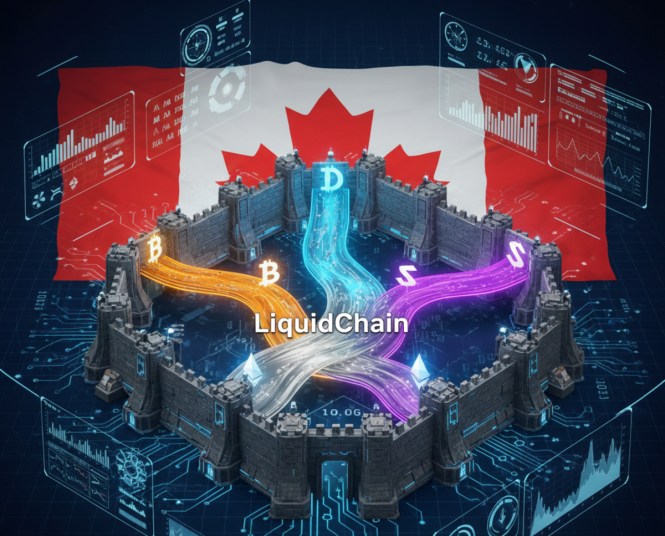
- CIRO has formalized interim custody terms for Canadian crypto platforms, mandating stricter capital requirements and defined custodial locations.
- The regulations aim to reduce counterparty risk and pave the way for greater institutional participation in the crypto market.
- LiquidChain introduces a Layer 3 infrastructure that unifies Bitcoin, Ethereum, and Solana liquidity into a single execution environment.
- The ‘Deploy-Once’ architecture allows developers to build cross-chain applications without managing multiple codebases.
The era of regulatory ambiguity in North American crypto markets is ending. Fast.
The Canadian Investment Regulatory Organization (CIRO) has officially formalized its interim terms and conditions for crypto asset trading platforms (CTPs), marking a hard pivot toward institutional-grade custody standards. It’s not just about restriction, it’s about maturation.
The interim crypto custody framework strictly defines ‘acceptable securities locations,’ forcing platforms to prove exactly where client assets sit. Implications for market participants are massive. The framework mandates rigorous capital requirements and limits where crypto assets can be held, effectively forcing CTPs to partner with custodians that meet distinct regulatory benchmarks.
That matters. It directly targets the counterparty risk that decimated trust during the 2022 offshore exchange collapses (think FTX). By clarifying these rules, CIRO is laying the plumbing for traditional finance (TradFi) to enter the sector without looking over its shoulder.
But there’s a catch. While regulators build safer silos for assets, the market faces a technical crisis: fragmentation. As compliant frameworks lock assets into specific ecosystems, moving liquidity between Bitcoin, Ethereum, and Solana gets harder. Capital becomes safe, sure, but stagnant.
Policy won’t fix this; infrastructure will. That’s the gap LiquidChain ($LIQUID) targets, proposing a unified environment where chain borders essentially vanish.
Layer 3 Infrastructure Targeting Liquidity Fragmentation
Right now, DeFi looks like a series of walled gardens. Bitcoin has the value, Ethereum has the contracts, and Solana has the speed. Moving capital between them usually means risky bridges or ‘wrapped’ assets, mechanisms that have historically been the biggest vectors for hacks.
LiquidChain enters as a Layer 3 (L3) protocol designed to fuse these ecosystems without that traditional friction.
Think of LiquidChain as a universal translator for liquidity. Instead of forcing you to juggle three different wallets, gas tokens, and confirmation times, the protocol aggregates liquidity from the ‘Big 3’ into one execution layer.
It’s aiming to be single-step execution: a transaction starting with $BTC liquidity can interact with an $ETH-based DeFi protocol or a $SOL-based NFT marketplace. No distinct hops required.
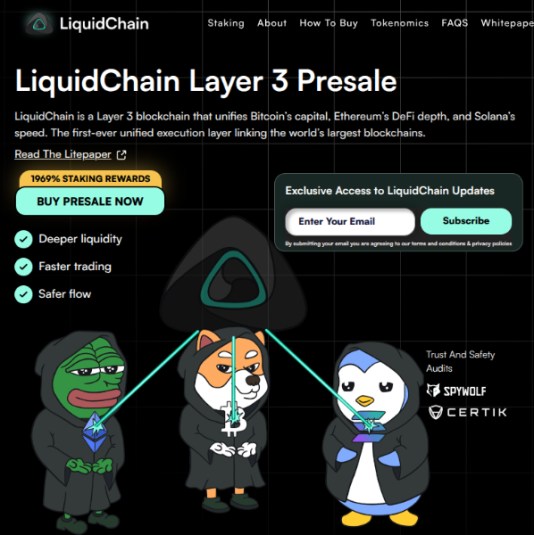
This approach cuts reliance on fragmented liquidity pools. By verifying settlement across chains through a unified Cross-Chain VM (Virtual Machine), LiquidChain attacks the capital inefficiency plaguing the market. As CIRO’s framework encourages institutions to custody assets safely, protocols like this provide the rails for that capital to actually flow. Compliance shouldn’t mean gridlock.
Deploy-Once Architecture Simplifies Institutional Access
Canada’s rules suggest the next wave of crypto adoption will be driven by developers building compliant, institutional-grade applications. But here’s the headache: a developer wanting broad reach currently has to code for EVM (Ethereum), Rust (Solana), and Bitcoin Script separately. That triples the workload and the surface area for bugs.
LiquidChain aims to fix this with its ‘Deploy-Once’ architecture. Developers write logic once that accesses assets across all supported chains simultaneously. For a new compliant exchange operating under CIRO’s guidelines, this could mean building a single interface sourcing deep liquidity from Bitcoin, Ethereum, and Solana without managing three backend nightmares.
With the proposition on offer, it’s not surprising to see why $LIQUID made our list of the best crypto to buy.
Plus, the protocol introduces a model for ‘Liquidity Staking’ to incentivize the fuel needed for this interoperability. LiquidChain is essentially betting that the future is about how effectively different chains work together. As clarity, like the interim crypto custody framework in jurisdictions like Canada, lowers the barrier to entry, the demand for infrastructure that simplifies complexity is only going to grow.
The content provided in this article is for informational purposes only and does not constitute financial advice. Cryptocurrency investments carry significant risk, including the potential loss of principal. Always conduct your own research and consult with a qualified financial advisor before making investment decisions.